
Fatigue is one of the most common complaints in any clinic. It is also one of the easiest diagnoses to code badly. A tired patient walks in, the provider documents “fatigue,” the coder selects R53.83 and weeks later the payer sends back a denial.
If that pattern sounds familiar, you are not alone. R53.83 claim denials are a steady drain on revenue for primary care, internal medicine and urgent care practices. The good news is that most of them are preventable once you understand what payers look for.
What R53.83 Actually Represents
R53.83 is “Other fatigue” in the malaise and fatigue family of codes. It covers tiredness, lack of energy and lethargy when no underlying cause has been identified. It is a symptom code and that single fact explains most of the trouble.
Payers expect symptom codes to support a workup, not a long run of repeat visits. When fatigue shows up as the only reason for a pricey lab panel or a sleep study, the claim looks thin.
Why Is R53.83 Denied?
If you have wondered why is R53.83 denied, the answer usually comes down to a handful of causes:
- The service does not match the diagnosis, which triggers a CO-50 medical necessity denial.
- The chart has missing documentation that explains how long the fatigue has lasted, how severe it is and what was ruled out.
- The claim relies on an unspecified diagnosis code when a more definitive one was available.
- The same symptom is billed visit after visit with no change in the plan.
- The claim has weak CPT and ICD-10 linkage, meaning the procedure does not logically connect to the diagnosis listed.
Any one of these can sink a claim. Together, they make a practice look like a target for a payer audit.
Claim Rejection vs. Denial
Teams often use these words interchangeably, but the difference changes your next move. The distinction in claim rejection vs. denial is simple. A rejection happens before the payer accepts the claim for processing, usually because of a formatting or data error. You fix it and resubmit. A denial means the payer processed the claim and decided not to pay, so you need a correction or an appeal.
Knowing which one you are holding keeps your team from wasting time on the wrong fix.
The Most Common R53.83 Coding Errors
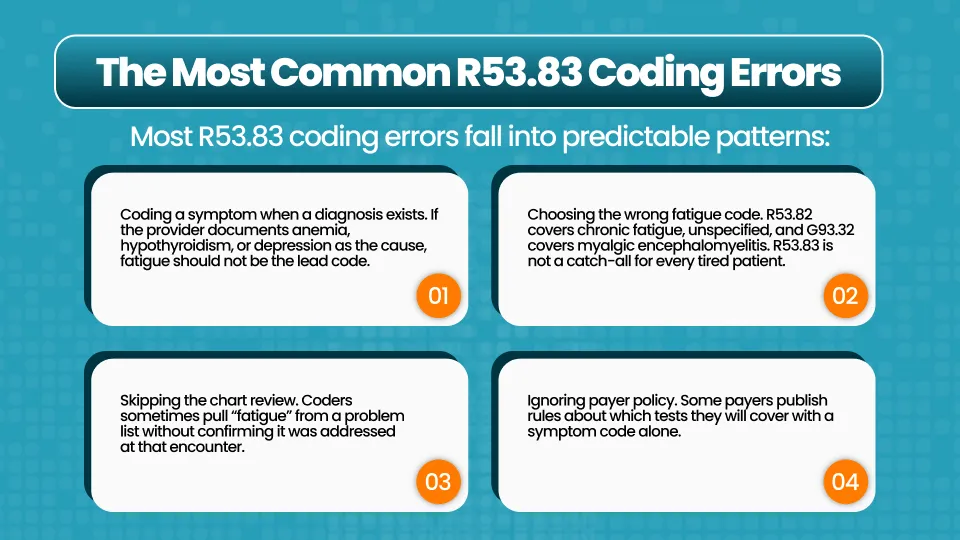
Most R53.83 coding errors fall into predictable patterns:
- Coding a symptom when a diagnosis exists. If the provider documents anemia, hypothyroidism, or depression as the cause, fatigue should not be the lead code. This is the core of symptom code vs. definitive diagnosis thinking: once a cause is confirmed, code the cause.
- Choosing the wrong fatigue code. R53.82 covers chronic fatigue, unspecified, and G93.32 covers myalgic encephalomyelitis. R53.83 is not a catch-all for every tired patient.
- Skipping the chart review. Coders sometimes pull “fatigue” from a problem list without confirming it was addressed at that encounter.
- Ignoring payer policy. Some payers publish rules about which tests they will cover with a symptom code alone.
A routine medical coding audit catches these errors early. Even a small monthly sample of fatigue claims can reveal whether the problem sits with documentation, coding, or billing.
How to Fix Denied Claims for Fatigue
Here is a practical answer for anyone asking how to fix denied claims for fatigue:
- Read the denial reason code first. CO-50 points to medical necessity, while other codes point to eligibility or bundling.
- Pull the full encounter note. Look for the history, exam findings, duration of symptoms, and any ordered tests.
- Check the code choice. If a more specific diagnosis was documented, correct the claim.
- Decide whether to resubmit or appeal a claim. A corrected coding error is usually a resubmission. A clinical disagreement about necessity usually needs an appeal with a provider letter and supporting notes.
- Track the deadline. Appeal windows vary by payer, and missing one ends the conversation.
Strong appeals show clinical reasoning. A note saying the provider evaluated fatigue lasting three months, ordered a thyroid panel and complete blood count, and reviewed medications tells a much better story than a bare diagnosis code.
Build a Denial Management Workflow
Fixing claims one at a time will never keep up with volume. A reliable denial management workflow gives every denial an owner and a timeline. At minimum, it should include:
- Sorting denials by reason code and payer
- Assigning each denial to someone within a set number of days
- Logging root causes in one shared place
- Feeding patterns back to providers and coders as short education notes
Over time, this approach improves your clean claim rate, which is the share of claims paid on first submission. A healthy clean claim rate means less rework, faster payment and fewer surprises on your aging report.
Good medical claim denial management is not only about recovering money. It is about learning from each denial so the same one does not come back next month.
When Outside Help Makes Sense
Some practices do all of this in house. Others find the workload grows faster than the team. If denials are piling up, partnering with medical billing services that specialize in denial work can free your staff and bring a fresh set of eyes to recurring patterns. Look for a partner that offers audits, root cause reporting, and transparent follow-up on appeals.
Frequently Asked Questions
What does R53.83 mean?
R53.83 is the ICD-10-CM code for other fatigue, including tiredness and lack of energy without a known cause.Is R53.83 a billable code?
Yes. It is a valid, billable code, but payers expect it to support a reasonable evaluation and not to carry expensive services alone.Why do fatigue claims get denied for medical necessity?
The documented symptom often does not justify the tests or procedures billed. Better documentation and better CPT and ICD-10 linkage usually solve it.Should I resubmit or appeal a denied R53.83 claim?
Resubmit if the denial came from a coding or data error. Appeal if the code was correct and the payer disagreed about necessity.How can I reduce fatigue claim denials?
Document duration, severity, and workup, code the cause when one is confirmed, and audit these claims regularly.Conclusion
R53.83 is not a problem code. It becomes one when documentation is thin and coding is rushed. Clear notes, careful code selection and a steady review process protect your revenue and your relationship with payers.
If your team is tired of chasing the same denials, now is a good time to review your fatigue claims and tighten your process. A short audit is often the fastest way to see where the money is leaking.