
A Virtual Assistant for Healthcare Practice helps by handling scheduling, patient communication, insurance verification, billing support, and records management remotely, so your team can spend more time on patient care and less time buried in paperwork. If your front desk is stretched thin or your admin backlog keeps growing, this is worth understanding in detail.
What Is a Healthcare Virtual Assistant?
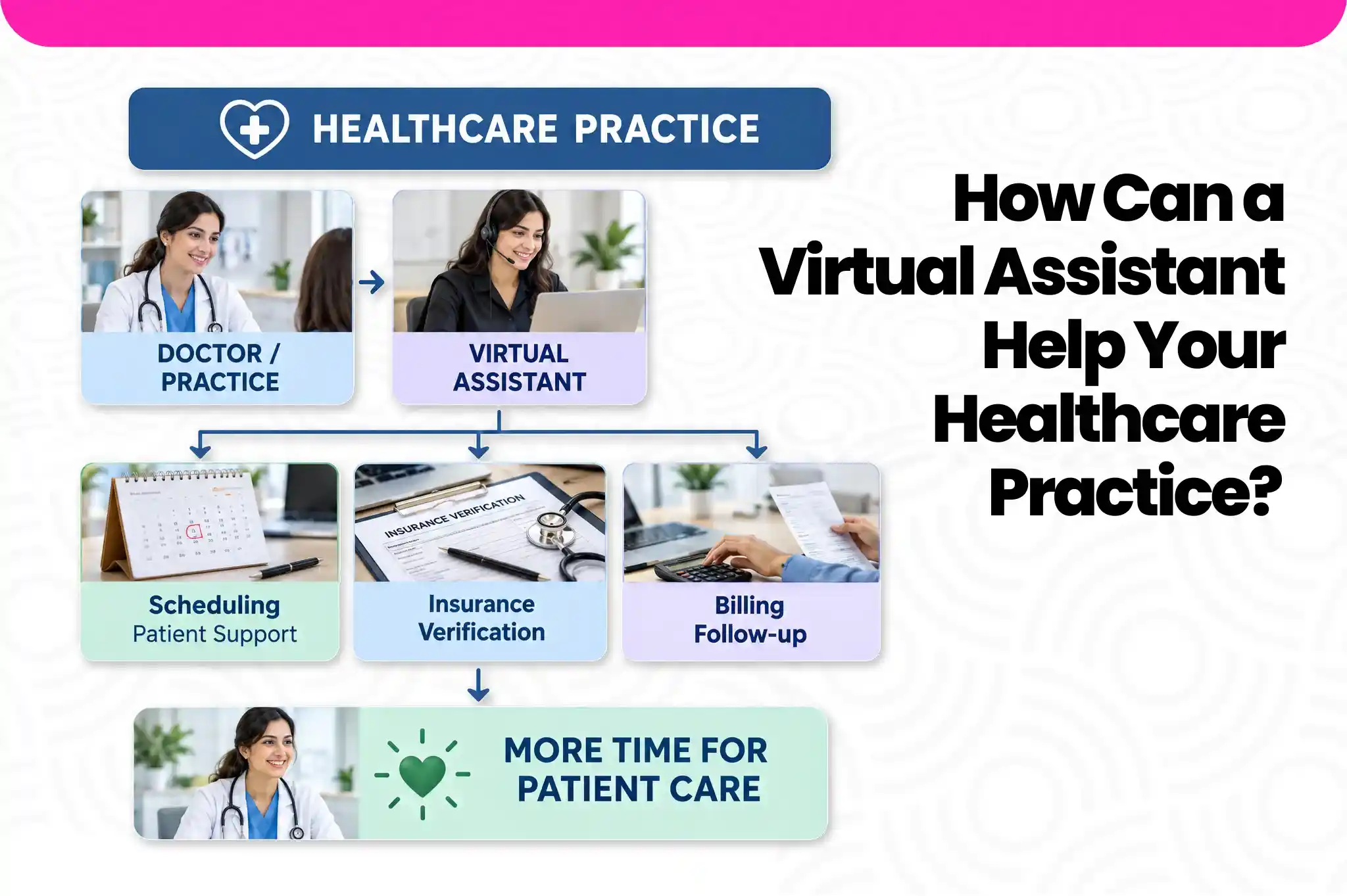
A healthcare virtual assistant is a remote professional who handles the administrative and operational side of running a medical practice. Think scheduling, billing support, patient communication, and records management, all done from outside your office but fully plugged into your systems.
This is different from a general VA who might help with email or calendar work for any kind of business. A medical virtual assistant is trained specifically in healthcare workflows: medical terminology, insurance processes, and HIPAA requirements. It is also different from an AI chatbot, which can answer basic questions but cannot manage a real workflow or make judgment calls the way a trained person can, and different from a billing company, which usually focuses narrowly on claims rather than the full range of admin tasks a practice needs covered.
One thing stays constant: a healthcare VA is not clinical staff. They do not diagnose, treat, or prescribe. Their job is making sure the administrative side of the practice runs smoothly so your clinical team can focus on patients.
The Administrative Burden Problem
Here is the scale of what practices are dealing with. US healthcare administration costs exceed $800 billion a year, roughly a quarter of all healthcare spending. For an individual practice, administrative overhead alone can eat up 15 to 25 percent of revenue.
On the physician side, the imbalance is just as stark. The average physician spends close to two hours on paperwork for every hour spent actually seeing patients. Prior authorization alone eats up hours each week, and industry surveys consistently name administrative burden as one of the biggest drivers of physician burnout.
Layer onto the ongoing staffing crisis in healthcare admin roles. Finding reliable front-desk and billing staff locally has become harder and more expensive. That combination is exactly why more practices are turning to remote support.
How Can a Virtual Assistant Help Your Healthcare Practice?
The right virtual assistant for doctors can take over repetitive administrative responsibilities without replacing the clinical expertise of physicians or other healthcare professionals.
Administrative Support
This is usually where practices start. A VA can manage virtual assistant scheduling duties: booking new appointments, handling reschedules, and sending reminders by phone, text, or email to keep no-show rates down. They also handle new patient intake and registration, keep EHR data entry current, and manage referral coordination so nothing falls through the cracks between specialists.
For practices that need flexible administrative coverage, a healthcare VA can handle these routine responsibilities remotely while your in-house team focuses on patients.
Billing and Revenue Cycle Support
Virtual assistant medical billing work covers a lot of ground: virtual assistant insurance verification before appointments, claim submission support, payment posting, and systematic accounts receivable follow-up on unpaid balances. VAs can also field patient billing questions directly, which takes a recurring burden off your front desk.
If billing backlog is a specific pain point, medical billing and revenue cycle management support can plug directly into this workflow.
Clinical Administrative Support
Some tasks sit closer to the clinical side without actually being clinical work. Prior authorization tracking and follow-up with payers is one example. Prescription refill coordination is another, handled administratively while the actual approval stays with the provider.
VAs can also communicate lab results to patients under provider supervision and support medical transcription, turning physician dictation into clean, structured notes.
Communication and Patient Engagement
A VA can answer patient calls and portal messages, follow up on satisfaction surveys, manage online reviews, and coordinate telehealth visits, including sending platform links and helping patients troubleshoot access issues before their appointment starts.
A virtual assistant patient communication workflow can make it easier for practices to respond to routine patient questions without constantly interrupting providers.
This is often where patients notice the difference first: faster responses and fewer things falling through the cracks.
How Much Does a Healthcare Virtual Assistant Cost?
The cost gap between a remote medical assistant and an in-house hire is significant. A medical VA typically runs $1,700 to $2,400 a month, compared to $50,000 to $65,000 a year for an in-house hire once salary and benefits are factored in.
That translates to an overhead reduction of roughly 60 to 70 percent compared to staffing the same role locally. Most practices see measurable savings within the first one to three months, particularly once a VA is running scheduling and reminder protocols that cut down on no-shows.
For a virtual assistant for small medical practice, this cost difference can make additional administrative support more accessible without committing to another full-time local employee.
Is a Healthcare Virtual Assistant HIPAA Compliant?
This is non-negotiable, and it should be the first thing you confirm before any patient data changes hands. A HIPAA compliant virtual assistant setup requires a signed Business Associate Agreement between your practice and the VA or the agency employing them. Without a BAA in place, no PHI should be shared, period.
Beyond the BAA, confirm the VA has completed HIPAA training, understands what counts as protected health information, and works through secure, encrypted systems rather than personal email or unsecured apps. A well-run setup also limits the VA's system access to only what their tasks require.
Who Should Hire a Healthcare Virtual Assistant?
A few situations make the case for a healthcare VA especially strong:
- Solo and small practices with limited or no dedicated admin staff
- Practices with high no-show rates, since a proper reminder protocol can cut no-shows by 30 to 50 percent
- Practices sitting on a growing billing follow-up backlog
- Practices dealing with constant staffing turnover in front-desk or billing roles
- Multi-location practices that need admin support that scales without a full local hire at every site
If any of that sounds familiar, the return on a VA tends to show up fast, especially around scheduling and billing follow-up. For practices where unpaid claims keep piling up, accounts receivable management support paired with a VA can clear that backlog faster than adding it to an already stretched front desk.
How to Get Started
Bringing on a healthcare VA works best when you resist the urge to hand off everything at once. A more sustainable approach:
- Decide which two or three tasks matter most right now, whether that is scheduling, reminders, or billing follow-up.
- Confirm HIPAA compliance and get the BAA signed before any patient data is involved.
- Check that the VA can work directly inside your EHR and practice management system.
- Start with a clearly defined scope and expand once the first few tasks are running smoothly.
If you are ready to hire a virtual assistant for healthcare, start by defining the specific administrative tasks you want to delegate and the systems the VA will need to access.
Practices that follow this order tend to see faster, cleaner results than those that try to delegate everything on day one.