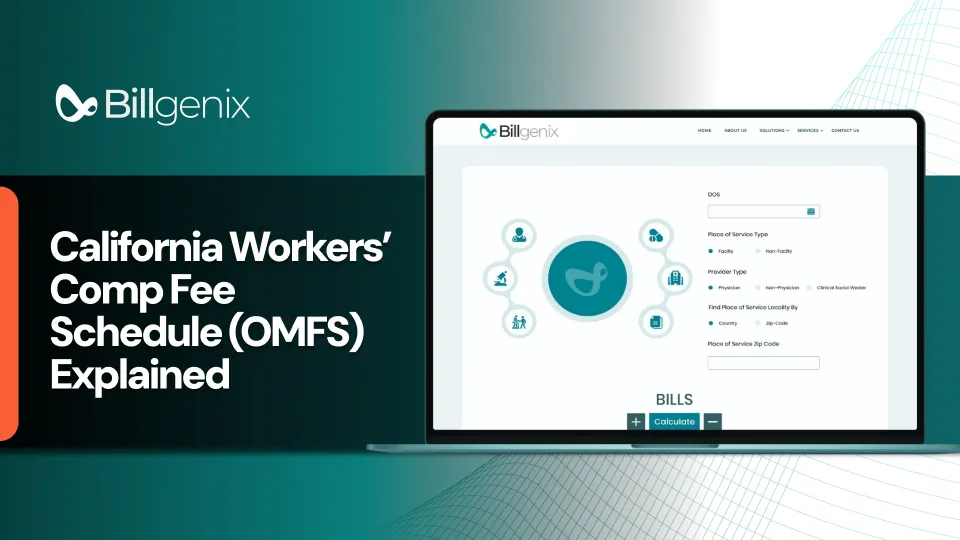
The California workers’ comp fee schedule sets the rules for how much healthcare providers can be paid for treating employees with work-related injuries or illnesses. If your practice sees workers’ comp patients, understanding it is part of getting paid correctly. A clear grasp of reimbursement rules helps your team submit accurate claims, reduce billing errors, and manage revenue with fewer surprises. This guide explains how the schedule works, which services it covers, how it affects daily billing, and what providers can do to stay accurate. It is written for California providers, billing teams, and administrators who want practical answers without the jargon.
What Is California’s Official Medical Fee Schedule (OMFS)?
The Official Medical Fee Schedule (OMFS) is the set of payment rules California uses to determine reimbursement for covered medical services in workers’ compensation cases. It is established and administered by the Division of Workers’ Compensation (DWC).
You may also see it called the California workers’ compensation fee schedule or the California OMFS. These terms point to the same framework.
The schedule keeps reimbursement consistent. Instead of every payer setting its own prices, claims administrators apply the same published rules and providers can see what applies to the service they delivered. These limits are often described as maximum allowable medical fees. Because rules differ by service, providers should always consult the schedule that matches the care they actually provided.
How Does the California Workers’ Comp Fee Schedule Work?
Determining payment follows a general path:
- Identify the type of medical service provided.
- Select the applicable fee schedule and billing codes.
- Apply the relevant reimbursement rules and adjustments.
- Review documentation, coding, and claim details before submission.
The final payment amount may depend on the service category and the governing rules. The OMFS includes different schedules for physician care, hospital services, pharmaceuticals and durable medical equipment, so not every service uses the same formula. For example, the physician fee schedule California providers rely on works differently from the rules for inpatient hospital stays.
Treat each category on its own terms, and confirm the version in effect on the date of service. Solid knowledge of California workers’ comp billing rules starts with that habit.
Which Medical Services Are Covered Under OMFS?
California’s fee schedule addresses several service categories:
- Physician and non-physician practitioner services.
- Inpatient hospital services.
- Hospital outpatient departments and ambulatory surgery centers.
- Pharmaceuticals.
- Pathology and clinical laboratory services.
- Durable medical equipment, prosthetics, orthotics, and supplies.
- Ambulance services.
Each category may have its own rules, rates, and effective dates. Rather than relying on old figures or memory, check the official DWC Official Medical Fee Schedule page for the category that applies to your service.
How Does OMFS Affect Workers’ Compensation Medical Billing?
Fee schedule rules shape nearly every step of workers’ compensation medical billing California practices perform. Medical billing for workers’ compensation depends on several connected tasks:
- Accurate medical coding and charge entry.
- Correct application of reimbursement rules.
- Complete supporting documentation.
- Timely claim submission and follow-up.
- Review of payment discrepancies and underpayments.
- Denial management and medical billing compliance.
Because rules vary by service, California workers’ comp reimbursement rates are not one-size-fits-all. A small coding or calculation mistake can change workers’ compensation reimbursement or trigger a rejection during workers’ compensation claims processing.
These tasks connect directly to medical billing and revenue cycle management. Consistent claim monitoring helps practices spot patterns early. Following the fee schedule does not guarantee payment or prevent every denial, but it gives your team a firm foundation for accurate claims.
Common Workers’ Compensation Billing Challenges
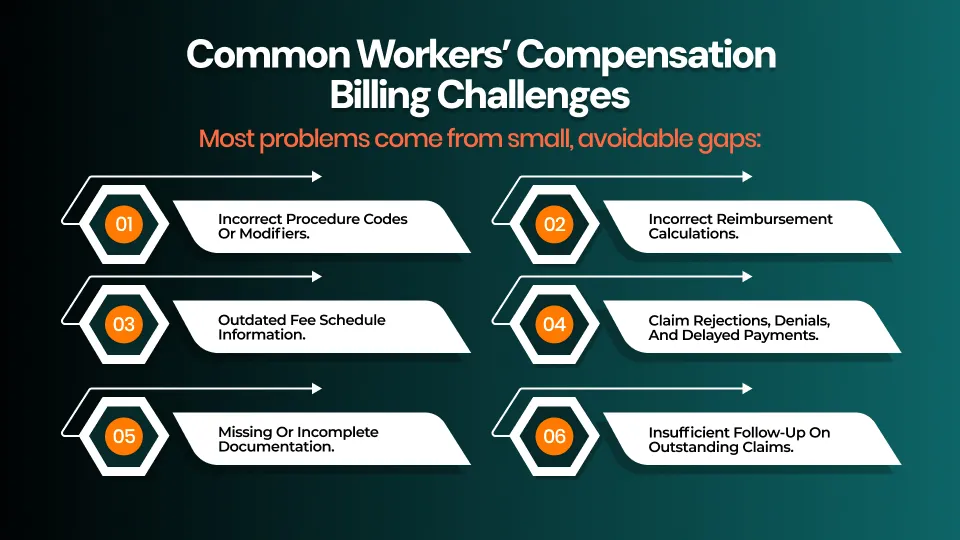
Most problems come from small, avoidable gaps:
- Incorrect procedure codes or modifiers.
- Outdated fee schedule information.
- Missing or incomplete documentation.
- Incorrect reimbursement calculations.
- Claim rejections, denials, and delayed payments.
- Insufficient follow-up on outstanding claims.
Frequent medical claim denials and slow payments drain staff time and delay cash flow. Billing expertise, regular fee schedule reviews and structured claim follow-up help providers catch these issues earlier and resolve them faster.
How Can Healthcare Providers Improve OMFS Billing Accuracy?
A few steady habits make a real difference:
- Verify the applicable fee schedule and its effective date.
- Review coding and billing documentation before submission.
- Monitor payment discrepancies and denial trends.
- Follow the appropriate review or dispute process when needed.
- Keep communication open with claims administrators.
When internal resources are limited, specialized workers’ compensation billing services can add capacity. A partner with California experience can support clean claims, steady follow-up, and healthier revenue cycle management, so your clinical team can stay focused on patients.
Frequently Asked Questions About California’s OMFS
1. What is the California workers’ compensation fee schedule?
It is the OMFS, the framework that determines reimbursement for covered medical services related to workplace injuries and illnesses.
2. Who establishes California’s Official Medical Fee Schedule?
The California Division of Workers’ Compensation administers the fee schedule under applicable state law.
3. Does the OMFS apply to all workers’ compensation medical services?
It covers many services, but different categories may have different schedules and payment rules. Verify the schedule that applies to your service.
4. How often does California’s OMFS change?
Updates happen through regulatory changes and administrative orders. Check the current DWC schedule and its effective dates.
5. How can medical practices reduce workers’ compensation billing errors?
Use accurate coding, complete documentation, current fee schedule checks, regular claim monitoring, and systematic denial follow-up.
Conclusion
Understanding the California workers’ comp fee schedule is important for accurate reimbursement, compliant billing, and an efficient revenue cycle. When your team knows which rules apply and checks them regularly, claims move with fewer delays. If your practice wants extra support, explore Billgenix’s medical billing and revenue cycle management services to simplify your workers’ comp billing.