The traditional annual performance review is quickly becoming a thing of the past. Waiting twelve months to discuss accomplishments, address challenges, or realign goals no longer works in fast-moving industries. Modern organizations are shifting toward continuous feedback in HR to keep teams aligned, motivated, and responsive to change.
Building a vibrant HR feedback culture creates an environment where communication flows naturally between managers and employees. Instead of stressful yearly evaluations, staff members receive real-time insights that help them adjust course, build confidence, and grow professionally every single day.
What Is Continuous Feedback in HR and Why Does It Matter?
Continuous feedback is an ongoing practice of sharing constructive observations, praise, and guidance in real time. Rather than relying solely on formal annual sit-downs, managers and peers exchange actionable insights as work happens.
Transitioning to an ongoing dialogue provides clear, measurable advantages across every level of an enterprise:
Immediate Realignment: Employees can correct mistakes immediately rather than letting poor habits persist for months.
Reduced Anxiety: Regular check-ins eliminate the stress and unpleasant surprises associated with traditional performance reviews.
Stronger Relationships: Frequent conversations foster trust, transparency, and psychological safety between leaders and team members.
Agile Development: Real-time feedback helps staff adapt quickly to changing company priorities and market demands.
The Key Components of a Continuous HR Feedback Culture
To establish an environment where ongoing guidance thrives, human resource leaders must align several core operational pillars.
Clear Performance Indicators > Continuous Employee Growth > Regular Recognition & Open Dialogues
1. Clear Performance Indicators and Goal Tracking
Feedback is most effective when grounded in clear, objective standards. Establishing measurable performance indicators ensures that both managers and team members share a precise understanding of success.
Modern human resource departments frequently deploy kpi tracking software to maintain transparency. When employees can view their benchmarks and key results in real time, feedback conversations remain constructive, data-driven, and focused on actual outcomes rather than personal opinions.
2. Comprehensive Performance Management Software
Managing real-time conversations across hundreds of employees requires scalable technology. Implementing dedicated performance management software centralizes feedback logs, goal updates, and one-on-one notes into a single accessible portal.
These digital tools make it easy for managers to set regular check-in reminders, request peer reviews, and document growth milestones continuously.
3. Integrated Operational HR Systems
Feedback systems work best when connected to everyday administrative tasks. Leveraging a complete HRMS with attendance and payroll features ensures that performance data connects directly with operational records.
When managers view attendance patterns, project completion rates, and goal achievement within one connected system, they gain a holistic view of team productivity. This makes developmental discussions far more accurate and efficient.
Strategic Benefits of an Ongoing Feedback Model
Boosting Employee Engagement and Retention
A major driver of workforce retention is feeling valued and heard at work. Sustained employee engagement occurs naturally when team members receive regular recognition and practical guidance from leadership.
When staff members see that their managers actively invest in their day-to-day success, job satisfaction rises sharply. Regular discussions show employees that their contributions matter, which significantly reduces voluntary turnover.
Accelerating Professional Employee Development
Traditional annual cycles often treat career progress as an afterthought. An ongoing communication framework keeps employee development at the forefront of daily operations.
Regular coaching sessions help workers identify skill gaps, master new competencies, and explore advancement opportunities continuously. This creates an internal talent pipeline ready to take on leadership roles as the organization expands.
Driving Long-Term Employee Performance Improvement
When corrective guidance is delivered promptly, minor errors are resolved before they turn into major operational bottlenecks. This focus on employee performance improvement ensures that productivity stays consistently high throughout the year.
Prompt feedback allows employees to refine their techniques, adopt better workflows, and contribute to business milestones with confidence.
How to Implement a Continuous Feedback Framework
Transitioning from traditional annual reviews to a modern, dynamic framework requires a thoughtful change management strategy.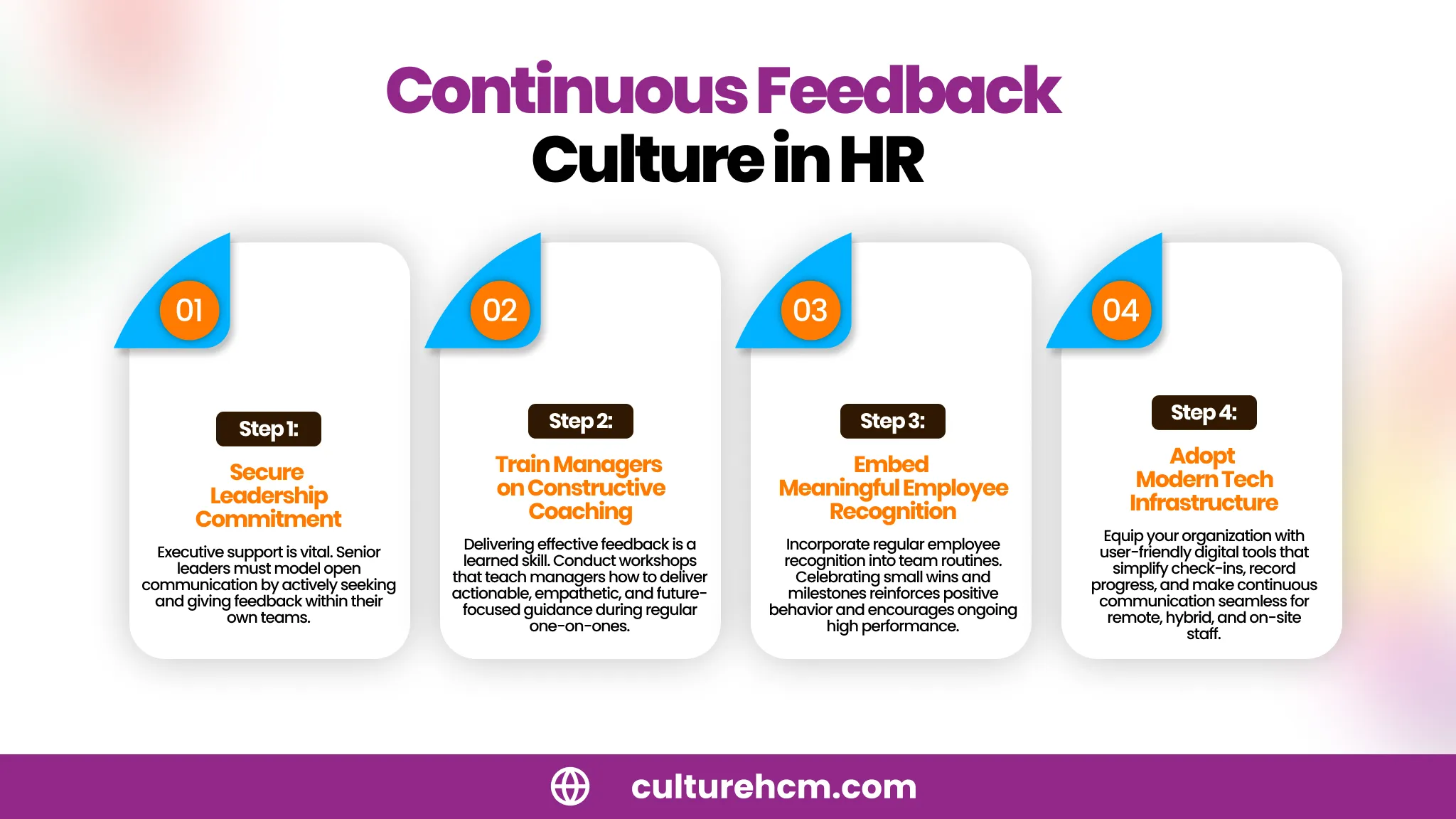
Step 1: Secure Leadership Commitment
Executive support is vital. Senior leaders must model open communication by actively seeking and giving feedback within their own teams.
Step 2: Train Managers on Constructive Coaching
Delivering effective feedback is a learned skill. Conduct workshops that teach managers how to deliver actionable, empathetic, and future-focused guidance during regular one-on-ones.
Step 3: Embed Meaningful Employee Recognition
Incorporate regular employee recognition into team routines. Celebrating small wins and milestones reinforces positive behavior and encourages ongoing high performance.
Step 4: Adopt Modern Tech Infrastructure
Equip your organization with user-friendly digital tools that simplify check-ins, record progress, and make continuous communication seamless for remote, hybrid, and on-site staff.
Aligning Continuous Feedback with Overall Performance Management
Continuous feedback does not mean eliminating structure. Instead, it transforms traditional performance management into an active, continuous partnership between managers and staff.
A comprehensive approach to modern employee performance management blends informal weekly conversations with structured quarterly goal check-ins. Modern continuous performance management strategies ensure that goals stay relevant as business needs evolve, helping the entire workforce stay aligned and agile.
Conclusion
Shifting to continuous communication transforms static evaluation into an active driver of organizational success. By replacing outdated annual reviews with real-time coaching, companies cultivate higher engagement, faster skill development, and sustainable performance across every department.
Ready to modernize your workforce management and elevate team output? Explore our complete HR technology solutions today to streamline your feedback processes, empower your managers, and build a high-performing workplace culture.
Frequently Asked Questions (FAQs)
What is the main difference between annual reviews and continuous feedback in HR?
Annual reviews evaluate an employee's work once a year, often focusing on past events and salary decisions. Continuous feedback involves ongoing, real-time coaching and conversations that focus on immediate growth, regular goal adjustment, and daily support.
How often should managers give feedback in a continuous feedback culture?
Feedback should occur naturally as work happens. Positive feedback and minor course corrections can happen daily or weekly, while structured one-on-one coaching sessions typically take place bi-weekly or monthly.
Does continuous feedback eliminate the need for formal performance evaluations?
Not necessarily. Many organizations keep lightweight quarterly or annual evaluations for compensation decisions, but these conversations become simple, predictable summaries because daily check-ins eliminate surprises.
How does continuous feedback support remote and hybrid teams?
Remote workers often feel isolated without regular office interactions. Continuous feedback keeps remote staff connected to their managers, clarifies expectations, and ensures their daily contributions are recognized.
What tools are needed to support continuous feedback in HR?
Organizations typically benefit from an intuitive performance management platform, specialized KPI tracking systems, and an integrated HRMS to keep attendance, goal tracking, and communication records organized.