Choosing the right billing form is one of the first steps in getting a California workers’ compensation claim paid. CMS-1500 workers’ compensation billing California providers use covers professional services, but hospitals, pharmacies, and dental offices may need different standardized forms or electronic formats.
This guide explains how the CMS-1500 and the California Division of Workers’ Compensation (DWC) requirements fit together, so your team knows which form to use and what information to include. Accurate claim details and complete documentation go a long way toward reducing avoidable billing problems. It is written for providers, billers, and practice managers who handle workers’ comp medical billing California every day.
What Is the CMS-1500 Form in Workers’ Compensation Billing?
The CMS-1500 is a standardized paper claim form that professional healthcare providers use to bill for medical services. Physicians and other eligible practitioners commonly use it to report patient details, diagnoses, procedures, and charges to the payer.
In California, the CMS-1500 form California workers’ comp claims rely on is part of standardized paper billing requirements. The form itself is familiar, but the rules for completing it follow DWC guidance. Providers should consult the applicable Medical Billing and Payment Guide instead of relying only on general Medicare instructions.
Accurate provider, patient, service and billing information matters because the workers’ compensation claim administrator reviews each line before deciding payment. Even small mismatches can slow processing.
Which Forms Are Used for California Workers’ Compensation Claims?
The correct form depends on the provider and the service. Common California workers’ compensation billing forms include:
- CMS-1500: professional healthcare services.
- CMS-1450 / UB-04: hospital and other applicable institutional services.
- NCPDP Workers’ Compensation/Property & Casualty Universal Claim Form: applicable pharmacy claims.
- ADA Dental Claim Form: dental services.
Before submitting on paper, verify the applicable version and completion requirements.
It also helps to understand what DWC means here. DWC is the California Division of Workers’ Compensation and not every one of the DWC forms for workers’ compensation is a medical billing form. Many serve separate administrative or reporting purposes, so avoid mixing them up with the standardized billing forms above.
How to Complete a CMS-1500 Form for California Workers’ Comp
These CMS-1500 claim form instructions give a practical overview of what a professional bill typically needs:
- Patient and relevant workers’ compensation claim information.
- Rendering provider and billing provider details.
- Dates of service and place of service.
- Diagnosis codes and appropriate procedure codes.
- Modifiers, units, and charges where applicable.
- Supporting medical records or reports required for the service.
- Payee and billing agent information, when applicable.
This is a summary, not a field-by-field manual. The exact fields and supporting medical billing documentation must follow California’s billing rules and the current Medical Billing and Payment Guide. Always check the official instructions on the DWC standardized paper billing page and its FAQs. For general form details, CMS also publishes a CMS-1500 overview.
How to Submit Workers’ Compensation Medical Bills in California
A consistent workflow keeps California workers’ compensation claim submission organized:
- Confirm the correct claims administrator and billing destination.
- Verify claim information and applicable billing requirements.
- Complete the correct standardized form or prepare the appropriate electronic transaction.
- Attach required supporting documentation.
- Submit the bill using the accepted method.
- Keep submission records and monitor claim status.
- Follow up on rejected, disputed, or underpaid bills.
California claims administrators are required to accept electronic bills. Providers may choose electronic medical billing or paper, subject to the applicable requirements. The DWC explains the options on its electronic billing page.
Common CMS-1500 and DWC Billing Errors to Avoid
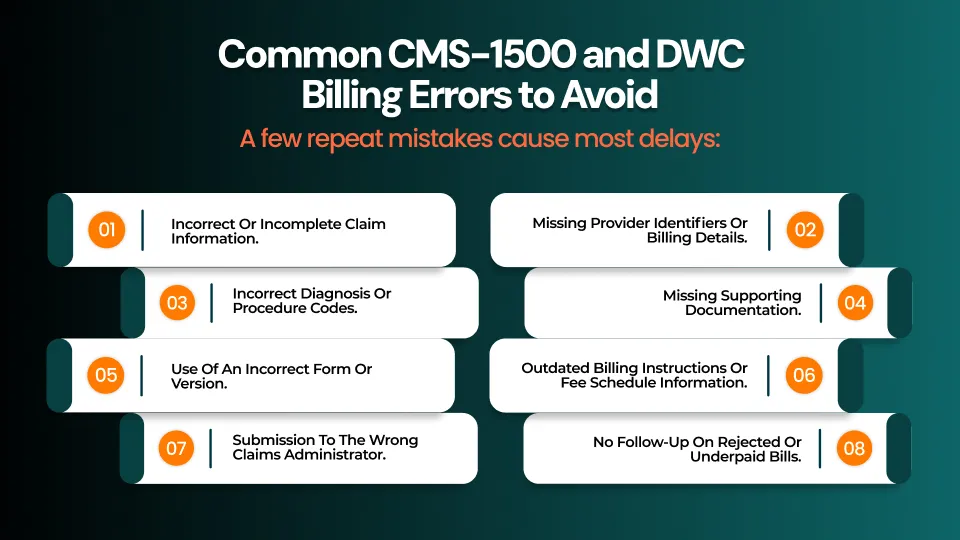
A few repeat mistakes cause most delays:
- Incorrect or incomplete claim information.
- Missing provider identifiers or billing details.
- Incorrect diagnosis or procedure codes.
- Missing supporting documentation.
- Use of an incorrect form or version.
- Outdated billing instructions or fee schedule information.
- Submission to the wrong claims administrator.
- No follow-up on rejected or underpaid bills.
Each one can lead to medical claim rejection and denial or a payment dispute. Pre-submission checks and a steady workflow support medical billing compliance and help your team catch problems before they cost time.
What Happens When a Workers’ Compensation Bill Is Denied or Underpaid?
Start with the Explanation of Review (EOR) or other payment notice. It explains, in plain terms, why a bill was adjusted, disputed, or denied. From there:
- Review the stated reason for the decision.
- Check the original claim and supporting documents.
- Correct errors when appropriate.
- File a Request for Second Bill Review within the applicable deadline.
- Consider independent bill review when the dispute qualifies and procedural requirements are met.
Deadlines and procedures change, so verify them against current DWC rules. Careful follow-up protects workers’ compensation reimbursement without guessing at timelines.
Frequently Asked Questions
1. What is the CMS-1500 form used for in California workers’ compensation?
It is a standardized paper claim form commonly used by professional healthcare providers to bill for medical treatment services.
2. Is the CMS-1500 required for every workers’ compensation claim?
No. The right form depends on the provider and service. Institutional, pharmacy, and dental services may use different standardized forms or electronic formats.
3. Can California workers’ compensation medical bills be submitted electronically?
Yes. Claims administrators must accept electronic treatment bills, and providers can submit them following the applicable standards.
4. What should providers do if a workers’ compensation bill is underpaid?
Review the Explanation of Review, identify the disputed issue, and follow the applicable second-review or independent-review process.
5. How can medical billing services help with workers’ compensation claims?
Specialized workers’ compensation billing services can help prepare claims, verify documentation, monitor submissions, investigate payment gaps, and manage follow-up.
Conclusion
Using the correct billing form, following California DWC requirements, and keeping accurate documentation are the foundations of clean workers’ comp claims. A consistent billing and follow-up process helps providers manage claims more efficiently and keep cash flow steady. If your practice wants experienced support, explore Billgenix’s medical billing and revenue cycle management services to simplify your workers’ compensation billing.