Healthcare providers in 2026 are increasingly outsourcing scheduling, patient communication, documentation, billing coordination, and administrative workflows to improve efficiency, reduce costs, and enhance patient care. A healthcare virtual assistant makes this possible by handling routine and time-consuming tasks that often slow down medical practice operations.
By delegating these responsibilities to a healthcare virtual assistant, clinics, hospitals, and private practices can improve workflow coordination, maintain accurate records, and ensure smoother communication between patients and providers while allowing medical staff to focus more on clinical care.
Top 10 Tasks to Outsource to a Healthcare Virtual Assistant
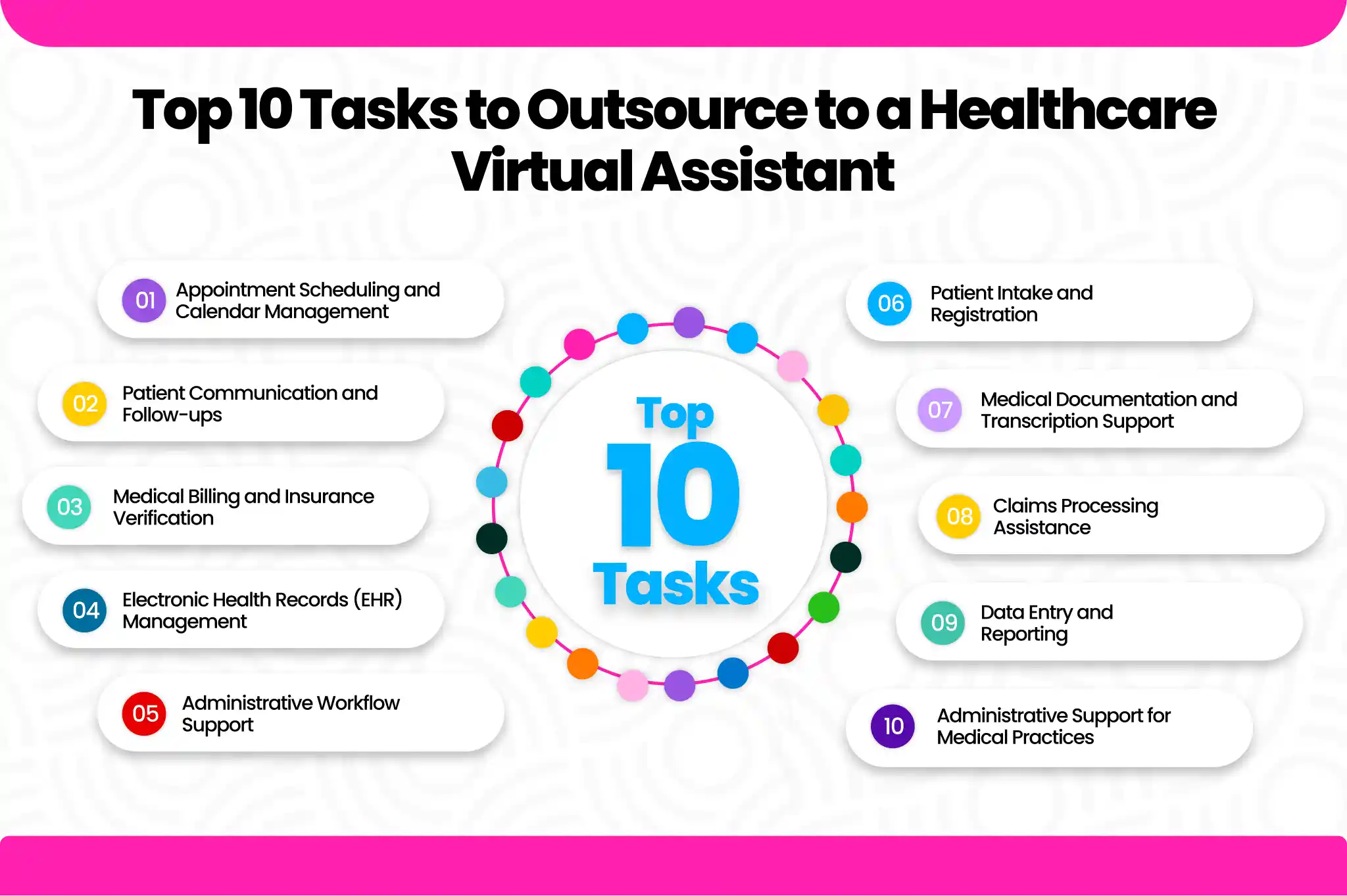
A healthcare virtual assistant plays a critical role in modern healthcare operations by handling both administrative and coordination-based responsibilities. Below are the most important tasks healthcare providers commonly outsource.
1. Appointment Scheduling and Calendar Management
Efficient scheduling is one of the most important functions in any healthcare practice, and a virtual assistant in healthcare ensures that calendars remain organized and conflict-free.
Tasks Include
- Managing daily, weekly, and monthly appointment schedules
- Coordinating between multiple providers and departments
- Handling cancellations, rescheduling, and emergency adjustments
- Sending automated reminders to reduce no-shows
Why It Matters
Proper scheduling reduces patient wait times, improves clinic flow, and ensures providers can maximize their consultation hours without administrative interruptions.
2. Patient Communication and Follow-ups
A healthcare virtual assistant services provider plays a key role in maintaining consistent and professional communication with patients across all touchpoints.
Tasks Include
- Responding to patient emails, calls, and messages
- Sending appointment confirmations and reminders
- Conducting post-visit follow-ups
- Sharing instructions for treatment or medication
Why It Matters
Strong communication improves patient satisfaction, builds trust, and ensures better treatment adherence over time.
3. Medical Billing and Insurance Verification
A remote healthcare virtual assistant can support critical financial workflows by assisting with billing-related tasks and insurance verification processes.
Tasks Include
- Verifying patient insurance eligibility
- Supporting claim submission preparation
- Tracking claim status and updates
- Coordinating with billing departments
Why It Matters
This reduces billing delays, improves reimbursement speed, and minimizes claim rejection errors that can affect revenue flow.
4. Electronic Health Records (EHR) Management
A virtual healthcare medical assistant helps maintain accurate and updated patient records, which are essential for clinical decision-making and compliance.
Tasks Include
- Updating patient medical histories
- Entering clinical notes into EHR systems
- Organizing lab results and reports
- Maintaining documentation accuracy and consistency
Why It Matters
Accurate records improve care quality, reduce medical errors, and ensure compliance with healthcare regulations.
5. Administrative Workflow Support
A virtual health assistant helps streamline internal operations by managing essential administrative responsibilities.
Tasks Include
- Email and inbox management
- Internal communication coordination
- Document preparation and organization
- Staff task tracking and follow-ups
Why It Matters
This improves internal efficiency and allows healthcare staff to focus more on patient-facing responsibilities.
6. Patient Intake and Registration
A virtual assistant healthcare role simplifies the onboarding process by handling patient registration and initial data collection.
Tasks Include
- Collecting patient demographic information
- Preparing intake forms and documentation
- Verifying insurance details before visits
- Organizing pre-appointment requirements
Why It Matters
A smooth intake process reduces waiting time and ensures better preparedness for consultations.
7. Medical Documentation and Transcription Support
A medical virtual assistant supports healthcare providers by managing documentation tasks that often consume significant clinical time.
Tasks Include
- Transcribing physician notes
- Preparing visit summaries
- Updating treatment documentation
- Organizing clinical reports
Why It Matters
This improves accuracy, reduces physician workload, and allows providers to focus more on patient care.
8. Claims Processing Assistance
The virtual medical assistants’ role includes supporting the claims lifecycle to ensure smoother insurance reimbursements.
Tasks Include
- Preparing claims for submission
- Checking documentation for errors
- Tracking claim approvals and denials
- Coordinating corrections when needed
Why It Matters
Efficient claims processing helps reduce revenue delays and improves financial stability for practices.
9. Data Entry and Reporting
The best healthcare virtual assistants ensure accurate data management, which is essential for both clinical and operational reporting.
Tasks Include
- Entering patient and operational data
- Generating performance reports
- Updating healthcare databases
- Maintaining accurate digital records
Why It Matters
Reliable data improves decision-making and helps healthcare providers track performance effectively.
10. Administrative Support for Medical Practices
The best virtual medical assistants help reduce overall workload by supporting multiple operational areas simultaneously.
Tasks Include
- Managing daily administrative tasks
- Coordinating between departments
- Handling routine operational follow-ups
- Supporting staff with general workflow tasks
Why It Matters
This ensures smoother day-to-day operations and improves overall practice efficiency.
Why a Healthcare Virtual Assistant Is Essential in 2026
A healthcare virtual assistant has become essential due to rising patient volumes, staffing shortages, and increasing administrative demands. Healthcare providers now need scalable solutions that improve efficiency while keeping operational costs under control.
In 2026, healthcare systems are focusing more on speed, accuracy, and workflow optimization, and a healthcare virtual assistant helps achieve this by reducing workload pressure and improving coordination across teams.
Key Reasons They Are Essential Today
- Rising patient volume and workload pressure
- Staff shortages in healthcare administration
- Increasing documentation and compliance needs
- Demand for faster patient communication
- Need for cost-efficient operational support
A healthcare virtual assistant improves coordination, speeds up daily tasks, and enhances patient management, making healthcare operations more efficient and structured.
Best Virtual Assistant Services for Medical Practice
Choosing the best virtual assistant services for medical practice has become increasingly important as healthcare providers look for reliable ways to manage administrative workload and improve operational efficiency. Modern practices now depend on these services to ensure smoother workflows, better patient coordination, and reduced internal pressure.
A strong provider of virtual assistant services for medical practice typically offers trained professionals who understand healthcare operations, patient communication, and basic clinical support tasks. This allows medical teams to focus more on patient care while routine responsibilities are handled efficiently in the background.
What These Services Usually Include
- Appointment scheduling and calendar management
- Patient communication and follow-ups
- Medical documentation and data entry support
- Insurance verification and coordination
- Administrative workflow management
Conclusion
A healthcare virtual assistant plays a crucial role in modern healthcare by handling administrative, operational, and coordination tasks that improve efficiency and patient satisfaction. By outsourcing routine responsibilities, healthcare providers can focus more on clinical care while ensuring smoother practice operations.
In 2026, adopting a healthcare virtual assistant is no longer optional; it is a strategic decision for scalable, efficient, and patient-focused healthcare delivery.
FAQs
1. What is a Healthcare Virtual Assistant?
A professional who remotely handles administrative and operational healthcare tasks.
2. Why do healthcare providers use virtual assistants?
To reduce workload, improve efficiency, and enhance patient care.
3. Can virtual assistants help with billing tasks?
Yes, many assist with billing coordination and claims processing.
4. Are healthcare virtual assistants cost-effective?
Yes, they reduce staffing and operational expenses significantly.
5. Do virtual assistants improve patient care?
Yes, by improving communication and reducing administrative delays.