A HIPAA compliant virtual assistant helps healthcare clinics safely outsource administrative, clinical, and communication tasks while ensuring patient data remains protected under HIPAA regulations. In 2026, clinics are increasingly adopting these assistants to improve efficiency, reduce workload, and maintain compliance without compromising data security.
Choosing a HIPAA compliant virtual assistant is essential for healthcare organizations that handle sensitive patient information as it ensures that all virtual support operations follow strict privacy, security, and confidentiality standards required in modern healthcare environments.
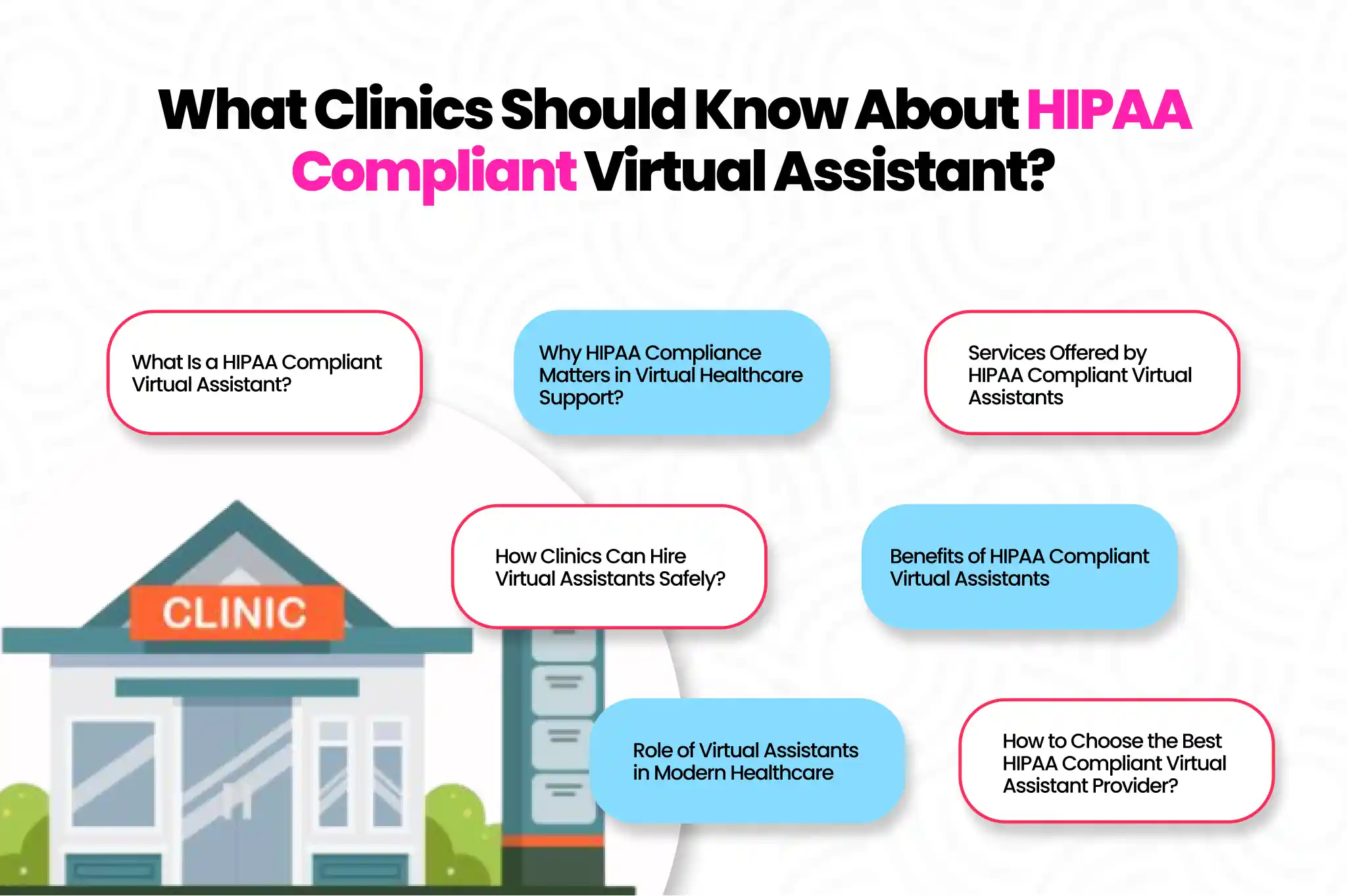
What Clinics Should Know About HIPAA Compliant Virtual Assistant
A HIPAA compliant virtual assistant is not just a remote support professional, it is a trained assistant who works under strict healthcare privacy guidelines to protect patient data while improving operational efficiency.
1. What Is a HIPAA Compliant Virtual Assistant?
A HIPAA compliant virtual assistant is a remote healthcare support professional trained to handle administrative and clinical tasks while strictly following HIPAA privacy and security rules.
They ensure that patient data is handled securely during communication, documentation, scheduling and workflow management while maintaining compliance at every step of the process.
Key Responsibilities
- Managing patient records securely and accurately
- Handling appointment scheduling and calendar coordination
- Supporting medical documentation and reporting tasks
- Assisting with communication workflows between patients and staff
- Maintaining strict data confidentiality and privacy standards
This makes them essential for clinics that want to maintain compliance while improving efficiency and reducing administrative pressure.
2. Why HIPAA Compliance Matters in Virtual Healthcare Support
HIPAA compliance is critical because healthcare providers manage highly sensitive patient data that must be protected from unauthorized access, misuse or breaches at all times. Even a small compliance failure can lead to serious legal and financial consequences.
A HIPAA compliant virtual assistant ensures that all data processing, communication, and storage practices follow strict legal and security standards required in modern healthcare operations.
Why It Matters
- Protects sensitive patient health information
- Prevents data breaches and cybersecurity risks
- Ensures legal and regulatory compliance
- Builds long-term patient trust and credibility
- Reduces operational, legal, and financial risks
Without compliance, healthcare organizations risk penalties, reputational damage and loss of patient confidence.
3. Services Offered by HIPAA Compliant Virtual Assistants
Most hipaa compliant virtual medical assistants provide a broad range of healthcare support services that help clinics operate efficiently while maintaining strict data security standards.
Common Services
- Appointment scheduling and patient coordination
- Patient communication and follow-up management
- Medical documentation and record support
- Insurance verification and eligibility checks
- Administrative workflow and task management
These services allow healthcare providers to reduce internal workload while ensuring smooth, secure and consistent operations.
4. How Clinics Can Hire Virtual Assistants Safely
When clinics decide to hire virtual assistant support it is essential to ensure the provider follows HIPAA regulations and uses secure systems for all data handling and communication.
What to Look For
- Signed Business Associate Agreement (BAA)
- Encrypted communication and data storage systems
- Strong privacy and security protocols
- Trained healthcare professionals with experience
- Proven compliance history and client trust
Selecting the right provider ensures both operational efficiency and complete data security.
5. Benefits of HIPAA Compliant Virtual Assistants
Working with HIPAA compliant virtual assistant services provides a strong balance between operational efficiency and regulatory safety, making them highly valuable for healthcare organizations.
Key Benefits
- Secure handling of sensitive patient information
- Reduced administrative workload for in-house teams
- Faster completion of daily operational tasks
- Improved patient communication and responsiveness
- Lower overall operational and staffing costs
These benefits allow clinics to improve productivity while staying fully compliant with healthcare regulations.
6. Role of Virtual Assistants in Modern Healthcare
Modern medical virtual assistant professionals are becoming essential in clinics due to rising patient volumes, administrative complexity and the ongoing shift toward digital healthcare systems.
They support both clinical and non-clinical workflows, helping improve coordination and ensuring smoother daily operations across healthcare teams.
Key Functions
- EHR and EMR system management support
- Scheduling and patient coordination tasks
- Patient communication and engagement support
- Billing and insurance processing assistance
- Clinical documentation and record maintenance
This significantly improves healthcare delivery efficiency and reduces pressure on internal staff.
7. How to Choose the Best HIPAA Compliant Virtual Assistant Provider
Selecting from the best virtual assistant companies requires careful evaluation of compliance standards, training quality and healthcare experience to ensure safe and effective operations.
Key Factors to Consider
- Verified HIPAA compliance certification and protocols
- Strong healthcare industry knowledge and experience
- Secure systems for communication and data handling
- Flexible and scalable service models
- Reliable communication and consistent support availability
Providers offering healthcare virtual assistant services should also demonstrate a deep understanding of clinical workflows to ensure smooth integration into healthcare systems.
Why HIPAA Compliant Virtual Assistants Are Essential in 2026
A HIPAA compliant virtual assistant is essential in 2026 due to rising documentation demands, staffing shortages, and stricter patient data security requirements in healthcare organizations.
A virtual healthcare assistant helps clinics stay compliant while improving efficiency, reducing administrative workload, and ensuring secure handling of sensitive patient information. This balance of compliance and productivity has become a key requirement for modern healthcare systems.
Key Reasons
- Increasing patient data and documentation requirements
- Ongoing staffing shortages in healthcare administration
- Stricter HIPAA compliance and data security rules
- Need for faster patient communication and coordination
- Rising pressure to improve operational efficiency
- Growing shift toward digital healthcare support systems
Best Healthcare Virtual Assistants in 2026
The best healthcare virtual assistants help clinics and medical practices improve efficiency, manage patient communication and reduce administrative workload while ensuring smooth daily operations.
Among the top providers, Virtual Mojoe stands out for offering trained healthcare virtual assistants who understand medical workflows, scheduling systems and patient coordination needs.
What Makes the Best Healthcare Virtual Assistants Stand Out
- Strong understanding of healthcare workflows and medical terminology
- Ability to manage patient scheduling and communication efficiently
- Experience with EHR/EMR systems and documentation tasks
- High accuracy in handling administrative responsibilities
- Knowledge of HIPAA compliance and data privacy standards
Virtual Mojoe is a strong choice for healthcare organizations looking for reliable and experienced healthcare virtual assistants in 2026.
Conclusion
A HIPAA compliant virtual assistant plays a vital role in helping healthcare clinics improve efficiency while maintaining strict data security standards. From scheduling and documentation to patient communication and administrative support these professionals ensure smooth and compliant operations.
In 2026, adopting HIPAA compliant virtual assistant services is no longer optional; it is a strategic necessity for clinics aiming to scale safely and efficiently.
FAQs
1. What is a HIPAA compliant virtual assistant?
A remote assistant trained to handle healthcare tasks while following HIPAA privacy and security rules.
2. Why do clinics need HIPAA compliant assistants?
To protect patient data and ensure legal compliance while improving efficiency.
3. Can virtual assistants handle patient data safely?
Yes, if they follow HIPAA guidelines and use secure systems.
4. What tasks do HIPAA compliant virtual assistants perform?
Scheduling, documentation, communication, billing support, and administrative tasks.
5. How do I choose a HIPAA compliant virtual assistant company?
Look for HIPAA certification, healthcare experience, and secure data handling processes.