Point of care documentation is the real-time recording of resident care by the caregiver while care is being delivered. For certified nursing assistants, it is the daily record of bathing, feeding, repositioning, toileting and every change noticed along the way. In 2026, staffing pressure, closer audits and payer scrutiny make accurate records more important than ever. This guide explains what CNAs record, how the process works, which mistakes to avoid, and why clean charting protects both residents and revenue.
Point of care documentation is the real-time recording of patient or resident care by the caregiver at the moment and location care is provided. CNAs use it to log ADLs, intake and output, mobility, behavior and changes in condition so nurses and care teams can act quickly.
What Is the Point of Care Documentation?
So, what is point of care documentation in simple terms? It is the habit of recording care right when and where it happens, instead of writing notes later from memory. The entry might be made on a tablet at the bedside a hallway kiosk, or a handheld device connected to the facility's EHR.
In point of care documentation in long-term care, these entries become part of the resident's official record. They feed the care plan, support the MDS assessment and give nurses a current picture of how each resident is doing.
What Do CNAs Document at the Point of Care?
CNA point of care charting covers the hands-on tasks performed every shift. These POC documentation examples show what belongs in the record:
- Activities of daily living (ADLs): bathing, dressing, grooming, toileting, eating, and transfers
- Intake and output: meals, fluids, and urine or bowel output
- Mobility: walking, repositioning, and use of assistive devices
- Behavior: agitation, withdrawal, or sudden confusion
- Skin and condition changes: redness, bruising, swelling, or new complaints of pain
- Refusals of care: what was refused and the reason the resident gave
A good entry is specific. "Resident ate half of lunch and drank one cup of water" tells a nurse far more than "ate fine."
How Does POC Documentation Work Step by Step?
The process is simple, and it works best when it becomes routine.
- Perform the care. Complete the task and notice how the resident responded.
- Record it immediately. Enter the details before moving to the next resident, while the facts are fresh.
- Review for accuracy. Check the resident, the task, the time, and the level of help given.
- Flag changes to the nurse. Report anything new, such as a skin change or a shift in behavior, and document it too.
Benefits of Accurate POC Charting
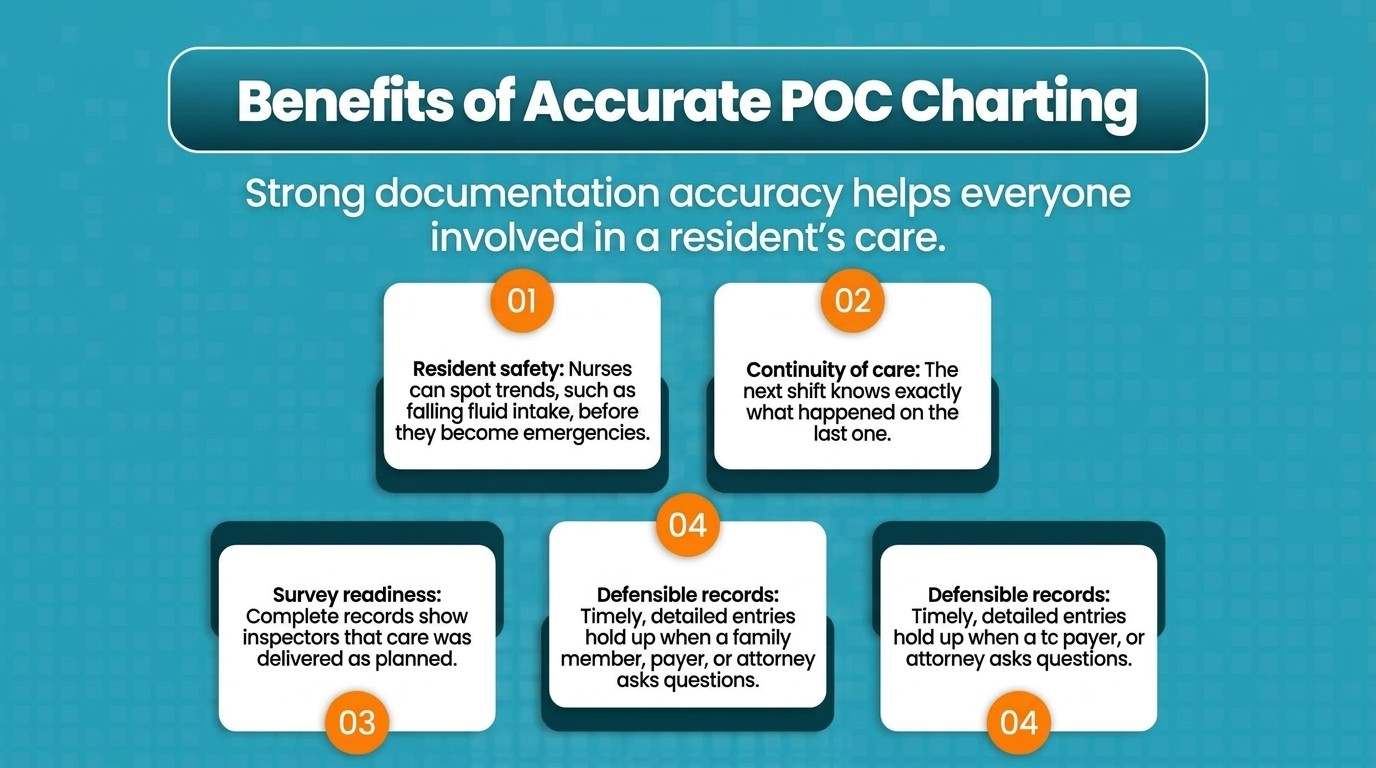
Strong documentation accuracy helps everyone involved in a resident's care.
- Resident safety: Nurses can spot trends, such as falling fluid intake, before they become emergencies.
- Continuity of care: The next shift knows exactly what happened on the last one.
- Survey readiness: Complete records show inspectors that care was delivered as planned.
- Defensible records: Timely, detailed entries hold up when a family member, payer, or attorney asks questions.
Common POC Documentation Mistakes
Most problems come from rushing or shortcuts, not bad intent.
- Charting at end of shift: Memory fades, and details get lost or guessed.
- Copy-forward entries: Repeating yesterday's note hides real changes.
- Vague notes: Words like "fine" or "normal" give nurses nothing to act on.
- Missed refusals: If a resident declines care and no one records it, the chart suggests the care was given.
- Unlogged condition changes: A bruise that goes unrecorded cannot be tracked.
Sometimes late entries cannot be avoided. When that happens, label the entry as late and include the actual time of care. The audit trail in the system shows when every entry was made, so honesty protects the whole team.
Best Practices for 2026
These healthcare documentation best practices keep charts reliable:
- Chart in real time. Real-time charting and bedside documentation beat any end-of-shift catch-up.
- Use standardized terminology. Shared words mean everyone reads an entry the same way.
- Audit regularly. Spot checks catch gaps and copy-forward habits early.
- Train staff. Short refreshers help CNAs know what to record and why.
- Choose the right technology. POC documentation software with kiosk or tablet charting makes entries faster, and prompts reduce missed items.
How Documentation Connects to Billing and Reimbursement
Payers and auditors, including those working on behalf of CMS, review the record to confirm that billed services were delivered and needed. If the chart is thin or inconsistent, claims can be delayed, reduced, or denied. Verify current CMS guidance before building your own policies.
Medical Lien Management has supported California providers for 25+ years, and clean documentation is one of the strongest predictors of smooth payment. Our RCM and Medical Billing & Coding services help facilities turn good records into timely reimbursement.
Frequently Asked Questions
What is point of care documentation in simple terms?
It is recording care at the moment and place it is given, usually on a tablet, kiosk, or bedside device.
What does a CNA document at the point of care?
CNAs record ADLs, intake and output, mobility, behavior, skin and condition changes, and refusals of care.
Why is real-time POC charting important?
Entries made right away are more accurate and let nurses respond to changes quickly.
What happens if POC documentation is incomplete?
Gaps can weaken care planning, create survey findings, and leave the facility unable to prove care was delivered.
Can POC documentation affect reimbursement?
Yes. The record is the evidence payers review, so weak documentation can lead to delays or denials.
Conclusion
Accurate point of care documentation is a daily habit that protects residents, supports clinical teams, and backs up every claim. When CNAs chart in real time, use clear language, and flag changes quickly, the whole facility benefits.
Want cleaner records and fewer payment delays? Talk to Medical Lien Management about documentation-driven revenue cycle support.